

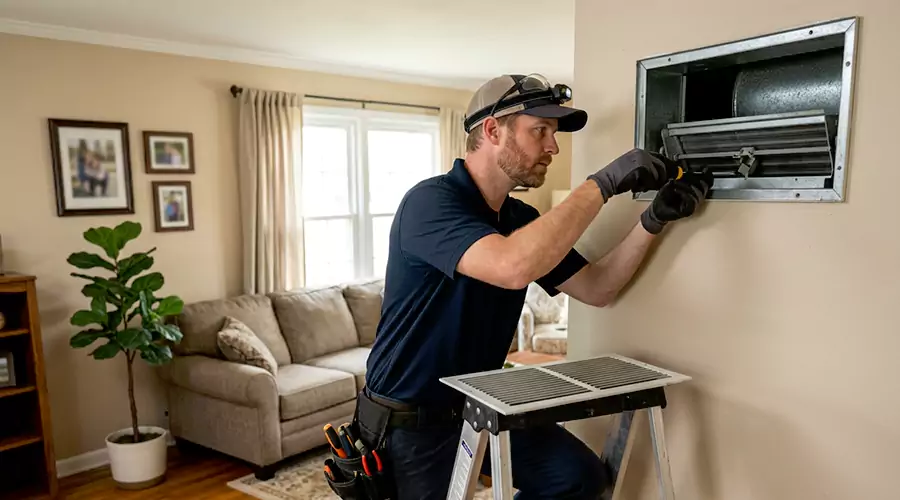
Air duct cleaning may remove accumulated dust, pollen, pet dander, and other allergen-containing debris from HVAC ducts, but there is not enough scientific evidence to show that routine duct cleaning consistently improves allergy symptoms. The U.S. Environmental Protection Agency (EPA) recommends cleaning residential air ducts when specific contamination problems are present rather than automatically scheduling the service for allergy relief. People with allergies often experience sneezing, congestion, itchy eyes, or other symptoms after exposure to airborne particles. Because heating and cooling systems circulate air throughout a house, homeowners may suspect that dirty ducts contribute to these problems.
However, allergens can also accumulate in bedding, carpets, upholstery, and other household surfaces. Some particles enter the house from outdoors, while others originate from pets or indoor activities. Cleaning ducts addresses only one possible location where particles may collect. Understanding the relationship between duct cleanliness and allergy exposure helps homeowners choose appropriate maintenance services without relying on unsupported health claims.
Can Dirty Air Ducts Cause Allergies?
Air ducts can contain allergen-bearing dust, but the presence of dust does not automatically mean the system is causing allergy symptoms. A targeted air duct deep cleaning is reserved for cases where the deposit load actually warrants it. The EPA explains that much of the dust inside residential ductwork adheres to interior surfaces rather than continuously entering the occupied rooms. Research has not conclusively shown that household airborne dust levels increase because ducts contain ordinary deposits.
In some situations, substantial contamination could contribute to unwanted particle distribution. This is more concerning when material is visibly released from supply registers or when moisture and pest problems affect the HVAC system. A professional inspection can help distinguish normal dust deposits from contamination requiring attention.
What Allergens Can Accumulate in HVAC Ductwork?
Different particles may enter ductwork as indoor air moves through the return system. Filters capture some of these materials, but the amount retained depends on filtration performance and duct condition.
| Potential Allergen Source | How It May Enter Ductwork |
|---|---|
| Pollen | Outdoor air entering through doors, windows, and other openings |
| Pet dander | Particles circulating from animals and household surfaces |
| Dust mite allergens | Dust disturbed from bedding, carpets, and upholstery |
| Mold particles | Airborne particles associated with indoor moisture problems |
| Cockroach allergens | Dust associated with pest contamination |
| General household dust | Particles generated during ordinary household activities |
Removing deposits from ducts does not eliminate the original sources. Allergens may continue entering the air after cleaning, making broader household maintenance important.
Does Professional Air Duct Cleaning Reduce Allergy Symptoms?
Scientific evidence does not establish consistent allergy improvement from routine residential air duct cleaning. The EPA states that duct cleaning has not been demonstrated to prevent health problems. Allergy practice guidance also reports that cleaning ducts has not been proven to reduce exposure to cat and dog allergens. This does not mean removing heavy contamination is useless. It means homeowners should separate the physical cleaning result from claims about medical benefits.
A cleaning company can reasonably describe removing deposited debris. It should not guarantee that allergies, asthma, or other respiratory conditions will improve afterward.
When Should Allergy Sufferers Consider Duct Cleaning?
Professional cleaning may be appropriate when an inspection identifies significant contamination, regardless of whether household occupants have allergies. The EPA recommends considering cleaning when substantial visible mold is present on hard duct surfaces, ducts contain rodents or insects, or excessive debris is being discharged into living areas.
Other circumstances, such as significant construction debris inside the system, may also justify inspection and cleaning. The contractor should explain the findings and identify what caused the contamination. Cleaning without correcting pest entry or moisture problems may allow the deposits to return.
Can Mold in Air Ducts Trigger Allergy Concerns?
Mold-related particles may be relevant to indoor environmental concerns when moisture problems affect the HVAC system. However, not every dark stain inside ductwork is mold. Proper assessment may be needed to identify suspicious growth. If substantial mold contamination is confirmed on suitable hard surfaces, professional cleaning or remediation may be appropriate. The underlying source of moisture must also be corrected.
The EPA advises that wet or moldy fiberglass duct insulation should be removed and replaced because it cannot be effectively cleaned. Homeowners should avoid accepting automatic mold-treatment packages without documentation of the problem.
Is Air Duct Cleaning Helpful for Pet Allergies?
Professional cleaning can remove pet hair and dander-containing deposits from duct surfaces. However, it cannot eliminate allergens remaining in carpeting, upholstery, bedding, or other household areas. Allergy practice guidance specifically advises against cleaning ducts solely to reduce exposure to furry-animal allergens because that benefit has not been demonstrated. Pet owners may benefit from maintaining suitable HVAC filters and regularly cleaning surfaces where hair and dander collect.
If inspection reveals heavy debris in return ducts, cleaning may still be justified based on contamination rather than an expectation of allergy treatment.
What Works Better for Reducing Indoor Allergens?
Allergen management generally requires addressing the sources and pathways of exposure. Duct cleaning alone cannot replace appropriate filtration, moisture control, and household cleaning.
Useful measures include:
- Using a suitable HVAC filter and replacing it as directed.
- Vacuuming floors and upholstery regularly.
- Washing bedding according to fabric-care instructions.
- Controlling indoor moisture and repairing water leaks.
- Addressing insect and rodent activity.
- Keeping pets and pet bedding appropriately groomed and cleaned.
- Considering a properly sized portable air cleaner.
- Maintaining the heating and cooling equipment.
Different allergens require different approaches. A healthcare professional can help identify relevant allergy triggers when symptoms continue.
What HVAC Filter Is Best for Allergies?
The EPA recommends a filter rated MERV 13 or the highest efficiency the HVAC system can accommodate. MERV stands for Minimum Efficiency Reporting Value and describes a filter's ability to capture specified particle sizes. Higher-efficiency filtration can reduce airborne particle concentrations when the equipment operates. However, an unsuitable filter may create excessive airflow resistance.
An HVAC technician can evaluate whether the existing blower and filter arrangement support a MERV 13 upgrade. The filter must also fit securely without allowing air to bypass its edges. Regular filter maintenance remains important because heavily loaded filters can affect system performance.
Can a HEPA Air Purifier Help With Allergies?
Portable air cleaners using high-efficiency particulate air filtration can remove certain airborne particles. The EPA reports that some studies have found improvements in allergy or asthma symptoms with portable HEPA devices, although the results are not consistent for everyone. Choose a unit with an appropriate clean air delivery rate for the room. Its effectiveness depends on room size, operating time, and the particles present. Air cleaners do not remove allergens already settled on household surfaces unless those particles become airborne. They also cannot correct the underlying cause of mold growth.
Avoid air-cleaning products that intentionally generate ozone because ozone can irritate the lungs.
How Much Does Allergy-Focused Duct Cleaning Cost?
The cost depends on the home's duct network and the cleaning services included. Professional duct cleaning is typically priced according to system size, accessibility, and the number of HVAC units. A homeowner should not pay extra for an alleged allergy-specific cleaning method without understanding what additional work is being performed.
Ask whether the proposal includes supply ducts, return ducts, plenums, and applicable HVAC components. Specialized remediation or duct repairs should be described separately. Compare written estimates and avoid contractors promising guaranteed health improvements.
Conclusion
Air duct cleaning can remove accumulated allergen-containing debris, but routine cleaning has not been proven to consistently relieve allergies. Professional service is more clearly justified when substantial contamination is documented inside the HVAC system. Filtration, surface cleaning, moisture control, and source reduction are important parts of managing indoor allergens. Homeowners experiencing persistent symptoms should seek appropriate healthcare advice rather than rely on duct cleaning as a treatment.